June 30, 2026
Digital | SEO | Strategy
Google Local Service Ads: The Ad You Only Pay for When the Phone Rings
An Ad You Only Pay for When It Works
If you run a local business, here’s one of the most direct ways to get your phone ringing: Google Local Service Ads.
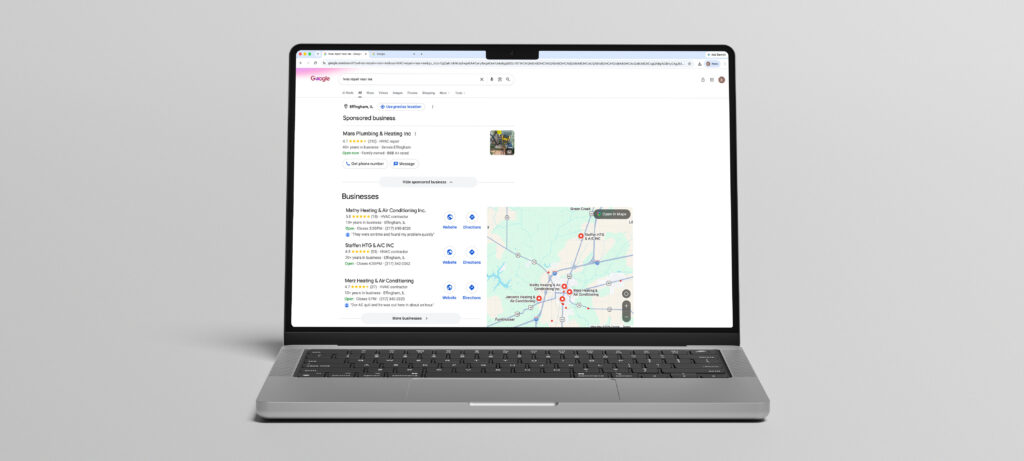
You’ve seen them without knowing what they were. Search “plumber near me” or “roofer in my city” and look at the very top of the page, above the regular ads and above the map. That row of businesses with star ratings, review counts, and a blue checkmark? Those are Local Service Ads, and they run on a model unlike anything else Google offers.
Here’s the part that surprises people. You don’t pay per click. You pay per lead, only when a customer actually contacts you through the ad. Below: what they are, who they’re for, and how to know if they’re right for you.
1. Understand How LSAs Are Different
Regular Google Ads charge you every time someone clicks, whether they become a customer or just bounce off your site. Local Service Ads flip that. You’re charged only when a real lead reaches out: a phone call, a message, or a booking made directly from the ad. If someone sees your ad and keeps scrolling, it costs you nothing.
There’s also nothing to write. No keywords to bid on, no ad copy, no landing pages. Google builds the ad from your verified business information, your service categories, and the area you serve. Your job isn’t to manage bids. It’s to stay responsive, keep strong reviews, and set a budget that matches how many jobs you can actually take on.
2. Know If You Qualify
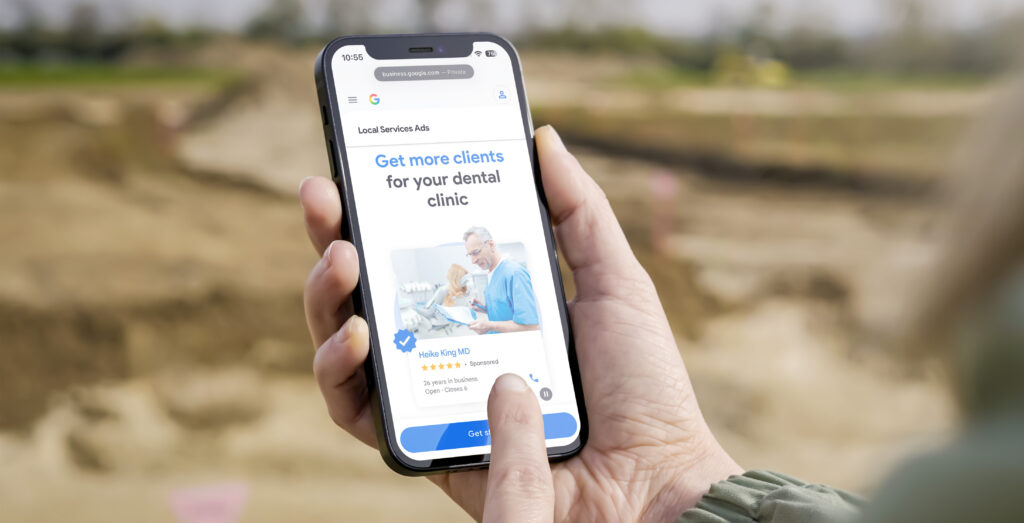
LSAs are built for in-person, local service businesses. The category list covers most of the trades and professional services you’d expect:
- Home services — HVAC, plumbing, electrical, roofing, lawn care, pest control.
- Specialty trades — garage doors, tree service, junk removal, window cleaning.
- Professional services — legal, real estate, financial, and more.
The fastest way to find out is to start the sign-up flow at Google’s Local Services site. It checks your business type and ZIP code instantly and tells you whether LSAs are available for your category and location before you submit a single document.
One requirement to know up front: a claimed and verified Google Business Profile is now mandatory to run LSAs at all. If you’ve already claimed and optimized your profile, you’re ahead of the game. (If you haven’t, that’s the place to start.)
3. Earn the Google Verified Badge
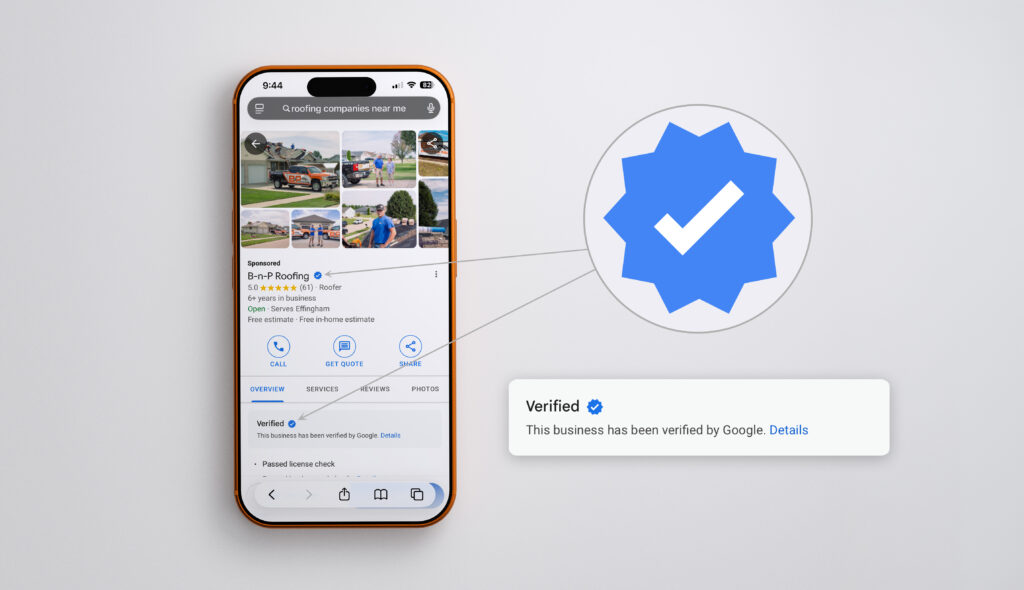
That blue checkmark next to the top listings is the Google Verified badge. It replaced the older “Google Guaranteed” and “Google Screened” badges in late 2025, unifying everything under one blue mark. To earn it, your business passes Google’s screening: background checks, license verification, and proof of insurance.
It’s worth the effort. The badge is a trust signal customers notice, and it tends to lift the rate at which people choose your listing over an unverified one. Set a reminder to keep your license and insurance current. If either lapses, your ads can quietly go offline until you update them.
Here’s where it ties back to your foundation. As of 2025, your LSA reviews come straight from your Google Business Profile. There’s no separate review system anymore. Your GBP star rating and review count are now one of the biggest factors in whether your ad shows up at all, so every happy customer you ask for a review is doing double duty: strengthening your profile and your ads at the same time.

Why LSAs Work So Well: Placement Plus Intent
The power of Local Service Ads comes down to two things: where they sit, and who’s clicking them.
On placement, LSAs sit at the very top of the page, above the regular ads and above the organic results. On a phone, they can fill the entire screen before anyone scrolls. They now appear inside Google Maps too, which matters because a large share of “near me” searches happen there. That’s the first thing a searcher sees.
On intent, the people tapping these ads aren’t browsing. They’re ready to book. They call or message right from the results, with no website to dig through and no long form to fill out. That low friction is exactly why LSAs convert so well for local businesses.
Here’s what makes LSAs unusual: ranking isn’t about who spends the most. The biggest factors are your reviews and how quickly you respond. Google now tracks whether you answer the phone and how fast. A business that’s slow to pick up loses placement no matter how big its budget. It’s one of the few ad products that rewards how well you actually run your business, not just what you’re willing to pay.
One word of caution. Because you pay per lead, the details matter. Set your service area to where you can realistically and profitably work, and list only the services you actually offer. A service area that’s too wide means paying for leads you can’t serve well. Tight and accurate beats broad and ambitious every time.
QUICK WIN — Do This in Under 15 Minutes
Go to Google and search for your service plus your city, the way a customer would. Do Local Service Ads appear at the top? If they do, note which competitors show up and how many reviews each one has. That’s your benchmark. If no LSAs appear for your category, that may be an opening worth claiming before your competitors do. Either way, you’ll know exactly where you stand.
Wondering If LSAs Are Right for You?
We help local businesses across the Midwest figure out where Local Service Ads fit, from eligibility and verification to setup and lead management. Let’s talk about getting you to the top of the page.
Previous Article
Authenticity isn’t a style. It’s a strategy.